Restructuring, State Policing, Others Imperative For Progress In Nigerian Democracy – Ikubese
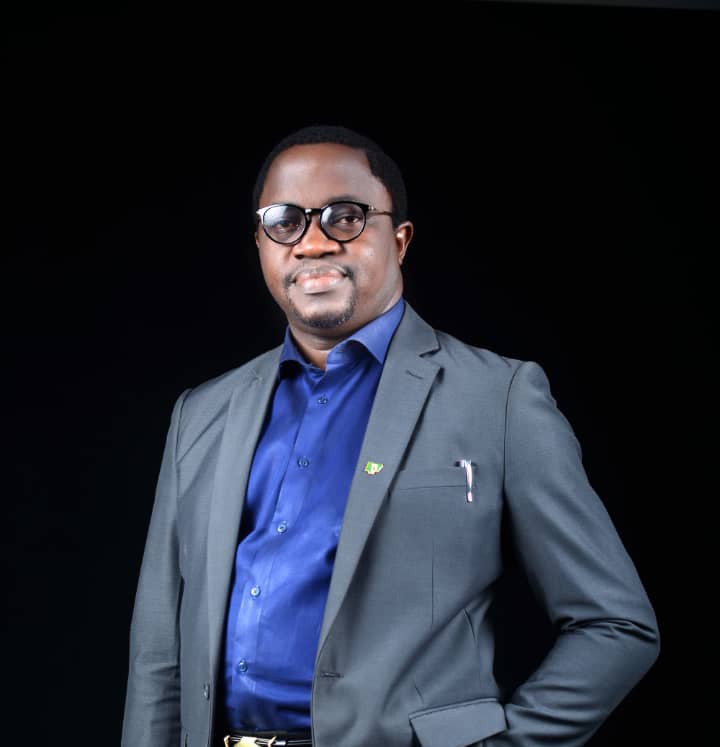
Dr Thomas-Wilson Ikubese, A Former Presidential Aspirant and Convener of the YesWeFit Revolutionary Movement has recomended restructuring, State policing and removal of the immunity clause for public office holders among others, as solutions to the current challenges of the Nigerian Democracy.
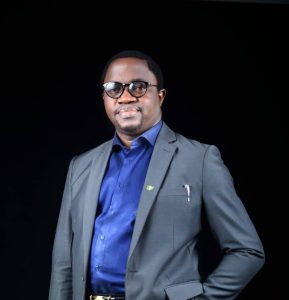
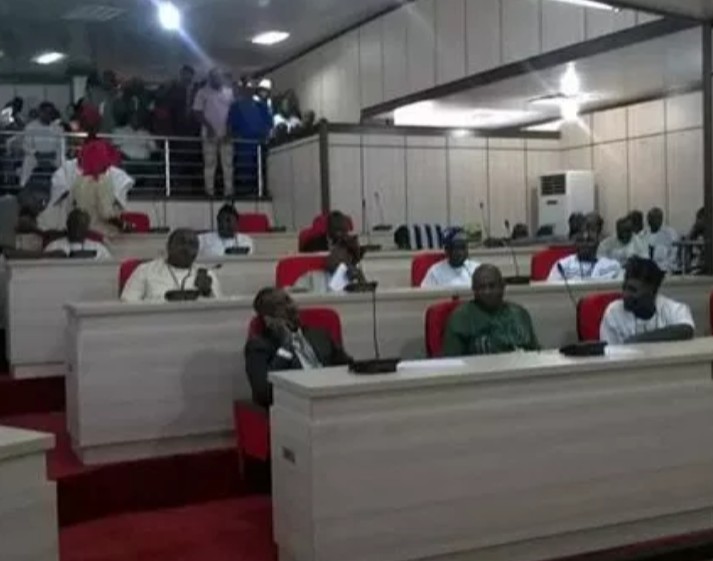
Ikubese spoke at the trace Annual Lecture And Awards held on Saturday in Akure, Ondo State
Below is the full text of his lecture unedited :
2019 AND THE CHALLENGES OF DEEPENING NIGERIA’S DEMOCRACY
BEING THE TEXT OF A LECTURE DELIVERED BY DR THOMAS-WILSON IKUBESE ON 19/1/19 ON THE OCCASION OF TRACE ANNUAL LECTURE AND AWARD AT RUBY’S COURT AKURE, ONDO STATE
Protocols.
HISTORICAL BACKGROUND
Nigeria gained independence from Britain on 1st October 1960.
The country was split into three geopolitical regions—Western Region, Eastern Region and Northern Region—and its political parties took on the identities and ideologies of each region.
The Nigerian People’s Congress (NPC) represented the interests of the predominantly Hausa/Fulani Northern Region, the National Council of Nigeria
and the Cameroons (NCNC)] (later renamed to “National Council of Nigerian Citizens”) represented the predominantly Igbo Eastern Region, and the Action Group (AG) dominated the Yoruba Western Region.
The NPC took control of the federal parliament, and formed a coalition government with the NCNC. The National Independence Party (NIP) formed by Professor Eyo Ita became the second political party in the old Eastern Region. Ahmadu Bello, the Sardauna of Sokoto, leader of the NPC, was poised to become the Prime Minister, but instead he chose to become the Premier of the Northern Region, and supported his deputy Tafawa Balewa’s candidacy for Prime Minister.
This raised suspicions amongst the southern politicians, who resented the idea of a federal government controlled by a regional leader through his designated proxy.
In the end, Tafawa Balewa of NPC was named Prime Minister and Head of Government, and Nnamdi Azikiwe of NCNC was named President.
At Nigeria’s independence, the Northern Region gained more seats in parliament than both Eastern and Western regions combined—this would cement Northern dominance in Nigerian politics for years to come.
Resentment amongst southern politicians precipitated into political chaos in the country. Obafemi Awolowo, Premier of Western Region, was accused of attempting to overthrow the government. This followed a period of conflict between the AG regional government and the central government. In spite of the flimsiness of the evidence presented by the government’s prosecutors, he was convicted. With incarceration of Awolowo, Samuel Akintola took over as the Premier of Western Region.
Because Akintola was an ally of Ahmadu Bello, the undisputed strong man of Nigeria, Akintola was criticized as being a tool of the North. As premier of the West, Akintola presided over the most chaotic era in Western Region—one which earned it the nickname “the Wild-Wild West”.
However, as late as Thursday, January 13, 1966, Balewa had announced that the federal government was not going to intervene in the West. However, the very next day, Akintola, premier of the West met with his ally Ahmadu Bello, the Sardauna of Sokoto, premier of the North and party boss of NPC party to which Balewa belonged.
At the same time a top-level security conference in Lagos was taking place which was attended by most of the country’s senior army officiers. All of this activity created rumors that the Balewa government would be forced to crack down on lawlessness in the West using military might.
FAST FORWARD TO 1999
Nigeria returned to democratic rule in 1999, after thirty-three years of primarily military rule.
For four years, between 1979 and 1983, democracy surfaced briefly, until General Buhari led a military coup to end it.
Between 1999 and 2015, Nigeria was ruled by the People’s Democratic Party (PDP), until the Buhari-led APC took over on the mantra of “change”
Many would argue that we were better of as a people under military regime, than in a democracy.
However, I believe that the worst civilian administration, is better than the “best” military regime!
Our best bet therefore is to join hands together and deepen our democracy, rather than fold our hands akinbo and wish a return to Egypt.
THE CHALLENGES OF NIGERIA’S DEMOCRACY.
Our democracy has not grown satisfactorily because of two major challenges;
1. Selfish leadership
2. Complacent Followership
Over the years, we have had the misfortune of being ruled by leaders who consider the interests of themselves, their family members and friends, ahead of the Nigerian people.
But if we are to look at the scenario critically and attempt to decipher what makes these political leaders so self-centered once they get into office, we would not need to look too far before the answers begin to stare us in the face!
How do we expect selfless service from a candidate who sold his landed properties, cars and even took bank loans, all in a bid to “settle” the political godfathers and even more so, the electorates, that they may support his political ambition?
Is it not only commonsensical, that he will first need to steal from government to pay his indebtedness and proceed afterwards to make profits from his “investment” thereof?
So, which is responsible for our tragedy? Are the politicians stealing because the people have collected so much from them before they’re voted into office? Or are the people demanding in advance from the politicians because they know that they’re going there to steal?
It does appear like a case of the egg and the chick, which comes first?
The second reason why our democracy remains yet at the paediatric level after all these years, is as a result of the complacency of the citizens.
It is normal for you to show allegiance to your preferred candidate and his political party before and during the electioneering process. However, as soon as the Candidate wins at the general election, your allegiance should shift from the Candidate to the Nigerian state, irrespective of your political affiliation.
Unfortunately, our people continue to defend every action of the government they helped install, no matter how poorly they perform.
This perpetual defence and unbridled loyalty may probably be understandable for card-carrying members of the Party, who want their Party to continually be in power and so benefit from the largesse thereof.
But how do we explain the large number of citizens, who are not card-carrying members of the ruling Party, who are not necessarily profiting directly from the juice of Power, and yet go the extra mile to defend every action of government, rather than criticize the government when necessary and make them stand on their toes and deliver to the people, the true dividend of democracy?
THE PRESIDENTIAL ASPIRANTS COMING TOGETHER (PACT) AS A CASE STUDY OF SELFISH LEADERSHIP.
In 2011, I published a book titled MY PRESCRIPTION FOR NIGERIA, which contains about 25 recommendations of the things we must do to make Nigeria a functional state.
Knowing the import of the content and what tremendous transformation it would bring to our nation, I sent the book to the then President, Dr Goodluck Jonathan. Unfortunately, it was not acted upon.
In 2015, when President Mohammadu Buhari came into office as the President, I again sent it to him. He was more magnanimous. He looked into it and tickled with a few of the recommendations.
However, seeing the unlikability of the government implementing the content of the book full scale, I declared on July 24th 2017 to run for the office of the President of the Federal Republic of Nigeria, using the content of the book as my manifesto.
In my declaration speech, I urged young Nigerians to rise up and show interest in partisan politics, build a New Breed of politicians who will see politics as an instrument of rendering service and not an opportunistic medium for accumulating wealth.
Later in 2018, a sizable number of young persons had arisen and declared interest in running for public office, a number of them taking a shot at the Presidency.
I then reached out to them, urging us to form a coalition, wherein we shall all come together, present one Consensus Candidate, while the rest of us drop our Presidential aspirations and queue behind that Candidate, working for his emergence at the poll.
Nigerians were excited, when we held the inaugural meeting at Chelsea hotel Abuja on 1st August 2018 and recorded a short video at Charly Boy’s house, pledging to work together to produce a single Consensus Candidate.
As the coalition progressed, some of the Presidential Aspirants came up with all manners of excuses and dropped off the table.
When eventually we got to the final stage and cast the ballot amongst ourselves and the Consensus Candidate emerged, the first runner’s up, who lost by one vote abandoned the group, declaring against the MOU that we signed, that he would yet continue to pursue his Presidential ambition.
When asked, why he rejected the result, he said the process was not credible. When asked if his attitude would have been different if he had won, he said “if I had won, the election would have been credible”!
The PACT’s experience showed that in deed, selfishness is one of the albatross of our political tragedy, as most Young Presidential Hopefuls wanted to go to the polls and have it written that they contested as Presidential Candidates in the 2019 general elections, even if they scored one vote!
Many of the New Breed politicians therefore have acted in manners that make the Old Breed politicians appear comparatively saintly!
MY RECOMMENDATIONS FOR DEEPENING NIGERIA’S DEMOCRACY
If we must deepen our democracy and grow Nigeria to become the nation of our dream, we must adopt yet the content of my book, MY PRESCRIPTION FOR NIGERIA, for therein lies our salvation.
I shall proceed to state some of the recommendations herein as ingredients for deepening our democracy;
1. Abolition of State of Origin
It is strange that Nigerians live like strangers in their country, because their parents did not come from a particular geographical location. They therefore feel reluctant to contest elections in those places, in spite of having lived there for several years.
State of origin should be abolished from our statutes and anyone who has lived in a place for five years, should be at liberty to contest election therein.
2. Resource control
Nigeria is one country that is blessed with abundant natural resources, yet we are the global capital of poverty.
Ondo state for instance sits on the second largest deposit of bitumen in the world.
To deepen our democracy and make us live maximally, each state should control its resources and pay tax to the Centre, instead of running cap in hand to Abuja each month.
3. State police
For many years now, Nigerians have had to deal with an inefficient, corrupt and a mediocre police force.
The federal government has also compounded the situation by underfunding and under-equipping the police, leaving the people to bear the brunt. This has also been compounded with the fact that State Governors who are supposed to be the Chief Security Officers of their states have no control over the Police Command in their states as Police Commissioners in the states are only answerable to the Inspector
General of Police in the Federal Capital Territory who is in turn answerable to the President; an equation that makes the governors mere figure-heads.
Having a Nigerian police which is comprised of persons who are locals of the environment and have been resident therein for years will certainly help in checking crime as these officers would know the nooks and crannies of the towns and villages, the socio-cultural settings and indeed the pedigree of residents of the communities.
Whoever emerges as the President on the 16th of February 2019 therefore should send an Executive Bill to the national assembly to prescribe that each state of the federation should have its own police, and the State Commissioner of Police answerable to the
state Governor, as the TRUE Chief Security Officer of the state.
4. The Constitution
It is rather unfortunate that today, you would see a well educated professional who is completely ignorant of the provisions of the Nigerian constitution.
This ignorance has had its negative backslash on the entire polity so much so that we find political office holders who do not know the
constitutional provisions for their office. This lacuna has led to the emergence of political office holders who sometimes take actions that run contrary to constitutional provisions only to reverse themselves after
wasting public funds.
The knowledge of the constitution should not be the exclusive preserve of lawyers, but rather should be at the finger tips of every Nigerian, whether occupying political office or not.
Therefore, we must reform our educational curriculum such that the Nigerian Constitution be taught in secondary schools as a
compulsory subject and a credit pass required to proceed to any institution of higher learning.
5. Leadership Academy in secondary schools
Pursuant to inculcating leadership qualities, interest and altruistic political engagements in our youths from a young age, I recommend that students in the Senior Secondary Schools be divided into two “political parties”;
Democratic Students Party and Republican Students Party.
Each Party shall be made to elect its leadership at the beginning of each
academic session.
Elections shall be held and students elected from their “political parties”
to the Students Government Council, which will comprise the Executive and Legislative arms.
The Nigerian Constitution shall be the statute book of the Student Government Council.
The aim of this is to encourage the spirit of political participation and
responsible leadership amongst citizens from a young age, exposing them to the provisions and practice of the Nigerian Constitution and arousing their interest in altruistic governance.
6. Remuneration for political office holders
For about a decade now, the recurrent expenditure of the government
has taken over capital expenditure, with the government at all levels spending more money on payment of salaries and allowances than
developmental projects that would have meaningful impact on the people.
Elected officials and their retinue of aides have continued to feed fat on
the resources available at the expense of development. This has also been compounded by the decision of the Revenue Mobilisation Allocation and Fiscal Commission to regularly increase the wages and allowances of political office holders in the country.
To deepen our democracy and get only those who are genuinely interested in service into government, the Monthly Salaries of the President and Governors should be reduced to just a little above that of the Permanent
Secretaries in the Federal and State Civil Service respectively, devoid of frivolous allowances.
Their number of Aides and unnecessary allowances should also be reduced significantly to reflect our economic realities, while legislators be paid sitting allowances, the summation of which should be within the civil service salary scale.
7. The National Assembly
Both the Senate and House of Representatives have similar function of making laws for the good of the people. It therefore makes no economic sense to maintain two separate arms for the same purpose. We must therefore collapse these two arms into one and reduce cost thereby.
8. Six years single term
The greatest distraction in the Nigerian polity, is the politics of “2nd
term”.
Since the return to democracy in 1999, Nigeria has been grappling with violence and malpractices during general elections, partly owing to the desperation of political office holders seeking a second term in office.
Although the Constitution allows for a second term in office, just like it is
the practice in most democracies around the world, it is however putting
Nigeria’s nascent democracy under a serious strain.
Under the present arrangement, most elected political office holders ‘thread softly’ in their first term in office because they do not wish to step on toes. Certain decisions that need to be taken for the betterment of the general populace are delayed till the second term in office, when they would no longer require votes from anybody. Hence, those who never
get the opportunity to make it to second term in office deprive the populace of the benefits of their ‘suspended’ best.
Typically, upon victory at the polls and the taking of the oath of office, the
governor/president spends the four years thus:
1st YEAR:
The first six months celebrating his victory, settling down, appointing commissioners, special advisers, senior special advisers, and
familiarizing himself with office generally.
The following six months is spent on governance.
2nd YEAR:
The second year is spent on governance.
3rd YEAR:
The first six months is spent on governance.
The following six months is spent scheming and laying the foundation for the second term campaign.
4th YEAR:
The entire year is largely dominated by grassroots politicking and campaigns for second term in office.
From the above analysis, we can deduce that of the four years, just about two and a half years is spent on real governance, while the rest is consumed by the second term virus.
Thus, if a single term non-renewable is introduced, the time and funds
wasted on the second term maneuverings will be eliminated.
Whoever emerges as the President after the Presidential election next month should therefore sponsor an Executive Bill to the
National Assembly prescribing that elected officials be allowed a single
term of five years as against the two terms of four years each stipulated
in the Constitution.
With this position, we will spend less on elections and politicking and
more time on governance while electoral malpractices and violence
caused by the desperation of elected officials to remain in office would
be reduced.
9. Non recycling of political office holders
One of the greatest albatross of the Nigerian state is the re-cycling of persons from one office to another. The typical Nigerian politician now sees politics as a “profession”, thereby oscillating from one office to
another, mastering the arts of manipulation for personal benefits without
recourse to the welfare of the citizens.
This also explains why he/she will do just about anything to remain in office, one way or the other; either by election or by appointment.
It is therefore common place to see a person run for local govt councillorship, complete his tenure, vie for local govt chairmanship,
complete his tenure, run for the state house of Assembly, complete his tenure, get appointed as a commissioner, complete his tenure, run for House of Representatives, complete his tenure, run for Senate, complete his tenure, run for governorship, complete his tenure, get
appointed as a Hon Minister, Ambassador, Head of Parastatal etc.
This perpetuation in office keeps young minds out of our polity and allows the old ones to recycle themselves to the detriment of the polity.
In order to correct this anomaly, whoever emerges as the President in next month’s presidential election should sponsor an
executive bill to the National Assembly that no Nigerian shall cumulatively occupy public office more than twice; either by election or appointment.
10. Penalty for looting public funds
The penalties given to
convicted corrupt government officials, often times is a slap on the wrist, for
embezzling millions of naira while petty thieves are sentenced to years
of imprisonment and sometimes to death .
Justice must be equal and must not recognize positions or wealth.
If Nigeria would make progress, whoever emerges as President next month, should sponsor a bill to the National Assembly
prescribing that any public office holder, who is convicted of corruption,
should face the following penalties:
A. Life imprisonment with no option of fine
B. Forfeiture of ALL assets, including those of spouse and children acquired after the public officer occupied office.
I so recommend because most corrupt public officers acquire assets fraudulently using the names of their spouses and children.
C. Banning the convict, spouse and children from ever holding public office in the country.
I so recommend because in most cases, the spouses and children are the ones that put pressure on the office holder to embezzle public funds.
Their song often times is “this is our time”. But if they are aware that they stand to forfeit their own chances in future if the office holder found wanting, they will be the ones putting pressures on him to be above board.
11. No immunity for public officers.
One of the catalysts for corruption in our polity is that the 1999 constitution confers immunity on certain categories of public office holders while they are yet in office. This provision which was originally meant to protect political office holders from unnecessary distraction has since been abused by our politicians who oscillate from one public office to another and thus remain perpetually “immuned” from prosecution, thus entrenching
corruption in the system.
In order to eliminate this ugly trend and entrench accountability in our
public life, the next president should sponsor a bill to the National Assembly for the withdrawal of the immunity clause for criminal cases.
By this, public officers shall yet have immunity against civil cases, but
shall have no immunity against criminal cases, including cases of
corruption filed against them by security or anti-corruptuion agencies and members of the public.
12. Special anti-corruption courts
The major cog in the wheel of Nigeria’s progress is CORRUPTION!
For many years, the country has been swimming deep in corruption, with
the epidemic eating deep into the fabrics of all the sectors of the nation’s economy.
Today, corruption seems to have become a way of life for an average Nigerian and there seems to be no way out.
The establishment of the Economic and Financial Crimes Commission
(EFCC) and the Independent Corrupt Practices and Other Related Offences Commission (ICPC) by the Federal Government was a right
step in the right direction in the efforts to fight corruption but the challenges facing the anti-corruption bodies are overshadowing the little
progress so far made in recent times.
Nigerians are often gutted to see highly placed officials arrested for corruption walk free without serving jail terms or returning their loots. Corruption cases in courts often drag for too long and more often than not those cases are either thrown out for lack of evidence or are never heard of after a while.
This is why I recommend that the next President should establish special courts to try cases of financial crimes and other related offences in the country.
In these special courts, frivolities and un-necessary adjournments would not be entertained and conviction would be secured within six months of filing a case just like it has been done for election dispute cases.
This speedy trial should be complemented by thorough and meticulous investigations by the prosecuting officials as against the usual practice where suspects are arrested in commando style and prosecuted on the
pages of newspapers only to walk free after a shamble show at the courts.
Persons with cases of corruption hanging on their necks should be allowed to go through the special courts and not declared as “saints” when they cross over to the ruling party!
13. Press conference
For our democracy to become entrenched, the President of the federal republic of Nigeria, in the company of Ministers and heads of FG parastatals should regularly address press
conference every three months, with gentlemen of the Press and members of the public in attendance, during which he shall take questions freely and officers involved made to respond accordingly to
enquiries put to them.
This should apply at the state levels, concerning the Governor, his commissioners and head of parastatals.
14. Monthly publication of income and expenditure.
For our democracy to flourish, we must entrench accountability in our public life.
Records of monthly income and expenditure of government should be published and placed in public domain for Nigerians to access.
This singular act is capable of reducing corruption and looting of public funds to the barest minimum.
SUMMARY
In conclusion, Nigeria is a nation that is specially endowed by Nature, both with natural and human resources.
We have however remained a laughing stock amongst the committee of nations because we have not stood up as a people to take our collective destiny in our hands.
I hate to hear anyone say a thing is not possible.
If it has not been done elsewhere before, what stops us from being the pacesetters?
If Nigeria will become the nation of our dream, the reality lies in a democracy wherein politicians go into government with the sole aim of rendering service and not to accumulate wealth. The people must desist from expecting financial inducement from politicians before casting their ballots and those who loot our treasury made to face the music within the shortest possible time, irrespective of their political affiliations.
A New Nigeria is possible.
Together we can
Yes We Fit!
Thank you for listening.
Dr Thomas-Wilson Ikubese
Former Presidential Aspirant,
Convener, YesWeFit Revolutionary Movement.
[email protected].
19th January, 2019