BEFORE ONDO HIKES THE COST OF EDUCATION By Debo Ikuesewo-Akinbami
It is neither to refresh history nor compare its pages. If intervention becomes dire at a critical fork as this does, it should not relate to judging but checking notes, which is a role we owe the whole as members.
It is , at best, a call on communal conscience to reason. Yes, communal, since ideas compared is better, and since the consequential, far reaching effect of a political action or inaction on the education theme challenges the aggregate to either fly or fall, we make quick call.
We are persuaded to do the calling because flying is what Ondo has done up to now, because even governmental intents refer to further altitude of the sphere, because whatever eventuality today’s debate delivers we shall have to taste near or far, sweet or sour. It therefore becomes best to provoke only thoughts capable of promoting a plus. And in gauging, we would do well to respect the various viewpoints. We must anticipate conflict, accommodate deferential stances to have safe birth of best. Where we disagree ideologically, which is normal to do, coordinating minds must be enabled to rise above demagoguery, qualify both qualities and porous pontifications and yet coalesce contents to worth.
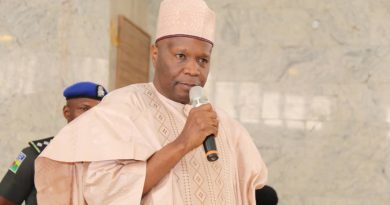
Governor Rotimi Akeredolu has said its doubts about the sustainability of certain existing policy options, including the probability of upping the cost of education. This may not have the political meaning we are won’t to give uncritically in times like this. It’s a stance that must be carefully considered to either avoid hasty criticism or credulous swallow. The government must have given his doubts as a result of the apparently inclement, prevalent fiscal situations. The governor must have been tinkering with workable options available as manifest evidences prove in the recent summit on education that happened at his instance, yet it is his within the laws to define or determine what his style or route to results shall be.
Before we worry about the effectuality or sterility of ingredients, or cringe about what the result of possible astronomical cost of training could be on the face lean parents, let it be given that the governor cannot desire less than success, both for what his legacies shall be and for a leading state he long itched to lead. Really, for the government of Akeredolu, one must do it either emphathy or sympathy, given that he is leading at a time when surpluses from oils have relaxed, but then governments are emplaced to solve problems, hence public expectations to the effect that a leader arms himself with ingenious, creative muse to confront emerging challenges of governance. After all, there will always be challenges for leaders to attend. If fiscal be his, it is expected that he confronts it, creatively, to comfort the people. We hope.
Governments before Akeredolu , expectedly, have applied different options, all with fine intendments. Late governor Segun Agagu wrought education department through massive investment in the rehabilitation of school structures, former governor Mimiko did especial works in the same sector, pointedly with his Mega School theory apart from other tertiary interventions. Mega school, we learned, was aimed at halting evident imbalance in the education between the kids of the rich and the poor by enabling the children from the less-privileged homes have access to quality education. Critics say it’s elitist, expensive and scanty, proponents say it is not. They argue it is designed for all children, irrespective of status, and intended to bring qualitative education to the doorsteps of pupils of different parental background, thereby bridging the gap between the rich and the poor, and that it would reach all constituencies if succeeding governments embrace it.
Embracing it or its equivalents is what Akeredolu is reluctant about doing. He must not sustain the trend, yet he must maintain quality, which is key. And in maintaining quality, cost a is a factor we must contend with particularly in seasons of drought. How does the government generate corresponding fund to meet up with the scorching financial demands of the sector if parents must not bear the burden? This should bother all stakeholders and preoccupy discuss as in the case of a summit, not facial redirection of state resources as that won’t help to achieve the economic growth and development that we seek.
In tune with present economic realities, we agree, parents should be encouraged to support the system by making reasonable contributions to the training of their young ones, but in doing this, it must not become burdensome. Government must put in her thinking cap and look for practicable ways it can swell the revenue of the state to meet up with prevailing socioeconomic needs, including the training of young citizens to whom government owes so much. Government has to reduce traceable leakages, wastages and redirect same to assist education. Operators of government whose emoluments gulp a fortune of the tax payers money must be ready to make sacrifices, including shedding of fat allowances. Government must lead attitudinal change from reckless spendings, encourage commitment to accountability and probity in the handling of government dealings, including needless award of contracts to cronnies.
Ondo state harbours rich raw materials that are capable of turning the state economy around; these resources should be given serious political attention so that the state can be financially better and depend less on the federal purse. Rising countries of the world are lifting fixations from oil and its allied, focusing on and prospering significantly from knowledge based economy, which only functional educational system can give. Government must actuate the political will to attend markedly to primary education and assist tertiary institutions to do it mandate as putative solution givers, including thinking out a way to make more money available to government, profering solutions to sundry socioeconomic problems and raising enough fund for thier own uses too without having to wait on government for all purposes.
Provision of free and qualitative education for the citizenry, especially the children of primary school age in Nigeria has its roots in Ondo State. Recall, Michael Adekunle Ajasin wrote, in 1951, the paper that was to become the educational policy of the Action Group party who advocated and adopted free education at all levels, a legacy which benefited most of today’s ruling elite. We can improve! It’s no crime to do. Improving on this or modifying same, if we must, should be done both critically and clinically, not by shying away from harsh but lasting solutions. Pushing back the weight to the citizenry is no permanent cure for it. Even the working parents, who are expected to do significant support, need salaries as and when due to make any contribution, a role which the government is struggling to do. What the government of Akeredolu must do is looking beyond ephemeral remedies, such as withdrawing government’s financial commitments.
We must not make the poor among us poorer by hiking the cost of training. Not all members of the whole are financially able and stable. The masses too must give their own quality education. If government runs away from solving finances hitches headlong as it worries education today, we shall expect it to give same attitude to healthcare services and infrastructures as time matures. That way, we shall only be delaying the doomsday!